The Eocene Epoch

The Eocene Epoch: The Dawn of Modern Ecosystems The Eocene Epoch, spanning approximately 56 to 34 million years ago, was a pivotal period in Earth’s history that saw the emergence of many modern ecosystems. It was the second epoch of the Paleogene Period and followed the dramatic warming event known as the Paleocene-Eocene Thermal Maximum […]
The Paleocene Epoch

The Paleocene Epoch: A New Beginning for Life on Earth The Paleocene Epoch, spanning approximately 66 to 56 million years ago, was the first epoch of the Cenozoic Era and a time of recovery and renewal. Following the dramatic extinction of the dinosaurs at the end of the Cretaceous Period, the Paleocene marked the rise […]
The Cretaceous Period

The Cretaceous Period: A Time of Transformation and Extinction The Cretaceous Period (approximately 145 to 66 million years ago) was the last and longest period of the Mesozoic Era, spanning nearly 80 million years. It was a time of significant geological, climatic, and biological transformations, marked by the diversification of life and the eventual mass […]
The Jurassic Period

The Jurassic Period: The Reign of Dinosaurs The Jurassic Period, spanning approximately 201 to 145 million years ago, was a pivotal era in Earth’s history. Falling in the middle of the Mesozoic Era—often called the “Age of Dinosaurs”—the Jurassic saw dramatic changes in the planet’s geography, climate, and ecosystems. This period is famous for its […]
The Triassic Period

The Triassic Period: Dawn of the Dinosaurs The Triassic Period (approximately 252 to 201 million years ago) marks the beginning of the Mesozoic Era, following the devastating Permian-Triassic mass extinction. This period is a story of recovery, innovation, and transformation. It saw the emergence of new ecosystems, the rise of the first dinosaurs, and the […]
The Permian Period

The Permian Period: Earth’s Greatest Transition The Permian Period (approximately 299 to 252 million years ago) represents the final chapter of the Paleozoic Era and a time of profound change for life and the Earth’s environment. Spanning nearly 50 million years, the Permian was marked by the formation of the supercontinent Pangaea, the diversification of […]
The Mississippian Period

The Mississippian Period: A Time of Shallow Seas and Marine Marvels The Mississippian Period (approximately 359 to 323 million years ago) represents the first half of the Carboniferous Period in North America. It is characterized by warm, shallow seas, extensive limestone deposition, and thriving marine ecosystems. This era set the stage for later terrestrial evolution […]
The Devonian Period

The Devonian Period: The Age of Fishes and the Greening of the Land The Devonian Period (419–359 million years ago) is one of the most dynamic intervals in Earth’s history. Often called the “Age of Fishes,” it saw unparalleled diversification of aquatic life and the first significant colonization of land by plants and animals. It […]
The Silurian Period

The Silurian Period: Life’s Step Onto Land The Silurian Period (443–419 million years ago) marks a transformative era in Earth’s history, bridging the gap between the Ordovician and Devonian periods. Following the devastation of the Ordovician-Silurian mass extinction, life rebounded, with significant advancements in both marine and terrestrial ecosystems. The Silurian is best known for […]
The Pennsylvanian Period
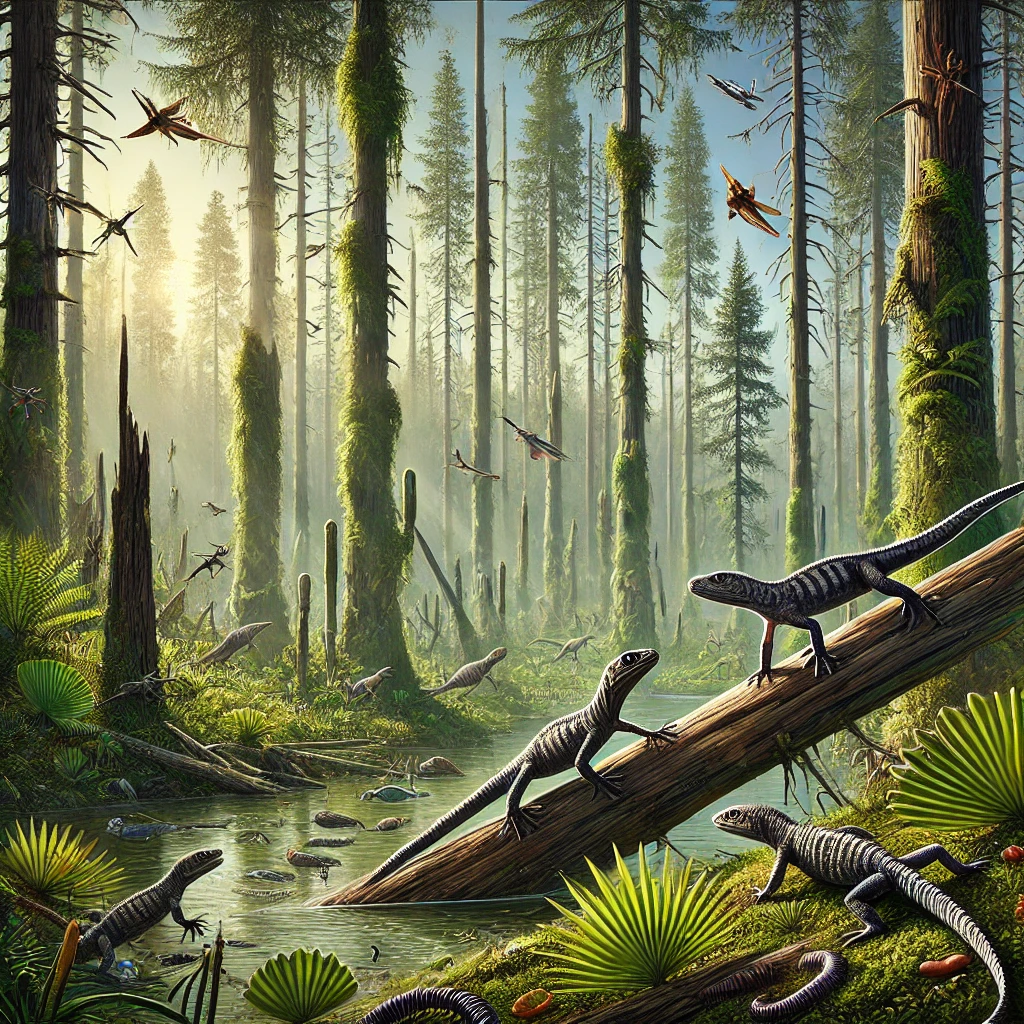
The Pennsylvanian Period: The Age of Coal Forests The Pennsylvanian Period (approximately 323 to 299 million years ago) is the latter half of the Carboniferous Period in North America, following the Mississippian. This time is famous for its vast swampy forests, which led to the formation of extensive coal deposits, and for significant evolutionary advancements […]